
Considering that human history occupies only a small period within the formation and development of nature, it becomes clear that the environment is not merely a background for art in general or literature in particular; rather, it has a direct and formative influence on both individuals and their works. When the intrinsic relationship between the environment and early works of art, as well as the importance attributed to nature in ancient Turkish literary texts, is taken into consideration, the relationship between environment, human beings, and art can be understood as a “cycle of life.” With its rich literary heritage reflecting the colors, textures, and landscapes of the environment from Central Asia to Anatolia, and from the Balkans to Siberia, Turkish literature possesses significant potential to contribute to environmental thought.
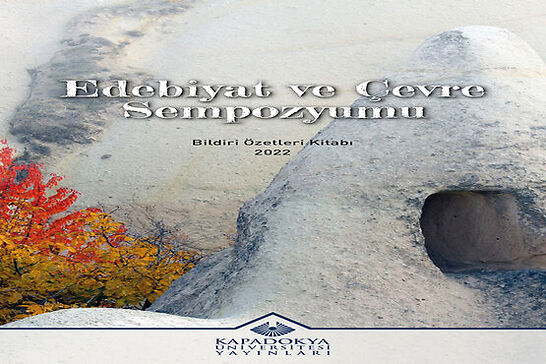
Committed to supporting academic activities that promote environmental sustainability as well as initiatives in the fields of art and literature, Cappadocia University organized the Literature and Ecology Symposium online on 27–28 May 2022. The symposium provided a productive academic platform encompassing Turkish literature as well as other literary fields and disciplines influenced by it.
The symposium brought together researchers working on environmental thought within the context of Turkish literature in Türkiye, creating an interdisciplinary environment for exchange and discussion. It evaluated existing scholarly knowledge in the field and encouraged collaboration for future research. This book brings together the abstracts of the papers presented at the symposium and contributes to academic discussions on the relationship between literature and the environment.